






When your dog is diagnosed with pancreatitis, one of the most important things you can do is change their diet. Pancreatitis is a condition where the pancreas becomes inflamed, and the wrong foods can make it worse or trigger flare-ups.

A carefully planned dogs with pancreatitis diet can make all the difference — not only for recovery but also for preventing future problems.
In this guide, you’ll learn exactly what foods your dog can and can’t eat, how to structure their meals, and how to treat them safely without triggering pancreatitis symptoms.
What is Pancreatitis in Dogs?
The pancreas is a small organ that helps your dog digest food and regulate blood sugar. When it becomes inflamed, it can release digestive enzymes into surrounding tissues, causing pain, vomiting, and other symptoms.
There are two types:
-
Acute pancreatitis – sudden onset, can be mild or life-threatening.
-
Chronic pancreatitis – ongoing inflammation that requires lifelong dietary management.
While causes vary, one of the biggest triggers is a high-fat diet. That’s why creating the right nutrition plan is the most important step after diagnosis.

Signs Your Dog May Have Pancreatitis
Before diving into the diet, it’s important to recognise the symptoms:
-
Loss of appetite
-
Vomiting or nausea
-
Abdominal pain (may yelp or hunch over)
-
Lethargy or weakness
-
Fever
-
Diarrhoea
If you notice any of these symptoms, see your vet immediately. Early treatment combined with dietary changes gives your dog the best chance of recovery.
Why Diet is So Important for Dogs with Pancreatitis
When a dog eats high-fat or hard-to-digest foods, the pancreas has to work harder to release enzymes. In a healthy dog, that’s manageable. In a dog with pancreatitis, it can cause severe inflammation.
A dogs with pancreatitis diet should be:
-
Low in fat – reduces strain on the pancreas.
-
Easily digestible – minimises digestive stress.
-
Rich in vitamins and minerals – supports healing.
-
Free from artificial additives – avoids unnecessary inflammation triggers.
What To Feed Dogs With Pancreatitis
Here’s a breakdown of gentle, nourishing foods that can fit into a pancreatitis-friendly diet.
When feeding a dog with pancreatitis, the focus is usually on simple, low-fat, easy-to-digest foods that are kind to sensitive tummies.
Always speak with your vet before making any major dietary changes.
1. Gentle Carbohydrates
Pumpkin
Naturally low in fat and high in fibre, pumpkin can help support healthy digestion.
Sweet Potato
A great source of slow-releasing energy packed with fibre and antioxidants.
Plain White Potato
Cooked plain white potato can be a gentle and easy-to-digest option when served without butter, oil, salt, or seasoning.
Brown Rice
Simple, gentle, and commonly used in bland diets for sensitive dogs.
Oats
A good source of fibre that may help support digestive health.
2. Low-Fat Fruits And Vegetables
Carrots
Rich in fibre and beta-carotene while naturally low in fat.
Blueberries
Packed with antioxidants and perfect as an occasional snack.
Apples (No Seeds)
Contain fibre and vitamin C with a naturally sweet crunch.
Green Beans
Low in calories and full of nutrients.
Kale
Packed with vitamins and antioxidants when fed in moderation.
Courgette
Light, hydrating, and gentle on digestion.
Banana
Provides natural carbohydrates and potassium in small amounts.
3. Specially Formulated Low-Fat Treats
Many ordinary dog treats can be high in fat or packed with unnecessary additives, which may not be suitable for dogs with pancreatitis.
That’s why choosing simple, natural treats made with gentle ingredients can make all the difference.
Soopa treats are made with 100% plant-based ingredients including sweet potato, pumpkin, banana, apple, and coconut, making them a great low-fat option for dogs with sensitive stomachs.
They’re natural, easy to digest, and perfect for pups who still deserve a tasty treat without the worry
Explore pancreatitis dog treats collection:

Shop Pancreatitis Friendly Treats
Foods to Avoid for Dogs with Pancreatitis
Certain foods should be strictly avoided:
-
Fatty meats like bacon, lamb, pork.
-
High-fat dairy like cheese, cream, butter.
-
Fried or oily foods.
-
Table scraps and leftovers.
-
Oily fish like salmon in large amounts.
-
Onions and garlic (toxic to dogs).
-
Processed dog treats with high fat content.
Answering Common Questions About Dogs with Pancreatitis Diet
Do dogs want to eat when they have pancreatitis?
Not always. Many lose their appetite due to nausea and discomfort. Gentle encouragement with small, low-fat meals can help.
What is the fastest way to cure pancreatitis in dogs?
There’s no instant cure. The quickest path to recovery is prompt veterinary care, medication if needed, and a strict low-fat diet.
What can I feed my dog with pancreatitis?
Lean protein, low-fat carbs, vegetables, and specially made treats like Soopa Pets Pancreatitis-Friendly Treats.
What foods aggravate pancreatitis in dogs?
High-fat meats, fried foods, dairy, and oily fish in large amounts.
How long does it take for a dog to recover from pancreatitis?
Mild cases can improve in days, but chronic cases require lifelong diet management.
Is pumpkin good for pancreatitis in dogs?
Yes, it’s low in fat, high in fibre, and supports digestion.
Is rice bad for a dog with pancreatitis?
No, plain, cooked rice is gentle and safe in moderation.
Soopa Pets Pancreatitis-Friendly Treats
Dogs with pancreatitis can still enjoy treats, as long as they’re the right kind. Our treats are:
- Low in fat
- Grain-free
- Hypoallergenic
- 100% natural
Shop the collection here:

Shop Pancreatitis Friendly Treats
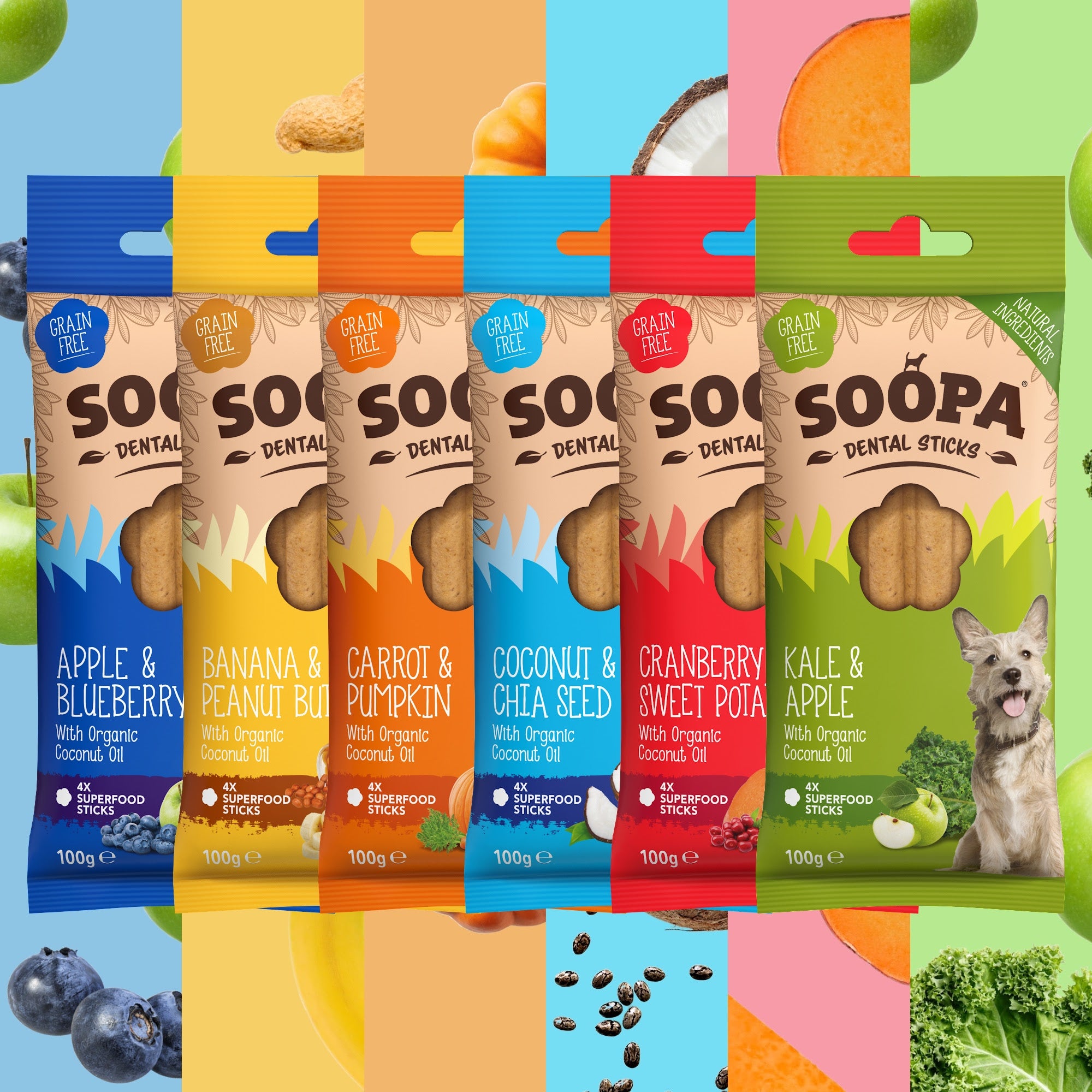
Best Seller: Mixed Pack Dental Sticks
Our Mixed Pack Dental Sticks are a favourite among dog owners managing pancreatitis.
Flavours and Benefits:
-
Apple & Blueberry – Antioxidants support immunity, vitamin C aids cell repair.
-
Banana & Peanut Butter – Potassium supports muscle health; peanut butter adds flavour in safe, low-fat form.
-
Carrot & Pumpkin – Vitamin A for vision and skin, fibre for healthy digestion.
-
Coconut & Chia Seed – Omega-3 fatty acids reduce inflammation, support coat health.
-
Cranberry & Sweet Potato – Cranberry supports urinary tract health; sweet potato offers slow-release energy.
-
Kale & Apple – Vitamin K for bone health, vitamin C for immunity.
Why they’re perfect for dogs with pancreatitis:
-
Only natural ingredients.
-
Gentle on the stomach.
-
Low in fat to avoid flare-ups.
Benefits of Each Ingredient for Pancreatitis Support
-
Apple – aids digestion, rich in vitamin C.
-
Blueberry – high in antioxidants to fight inflammation.
-
Banana – provides natural energy without excess fat.
-
Peanut Butter (low-fat) – safe protein boost.
-
Carrot – supports eye health and digestion.
-
Pumpkin – eases diarrhoea and constipation.
-
Coconut – supports healthy skin and coat.
-
Chia Seeds – anti-inflammatory omega-3.
-
Cranberry – protects urinary health.
-
Sweet Potato – antioxidants for immune health.
-
Kale – nutrient powerhouse for overall health.
Final Thoughts
A dogs with pancreatitis diet can give your pet a happier, healthier life. With the right food choices and safe, low-fat treats, you can manage symptoms and reduce flare-ups.
Your dog doesn’t have to miss out on tasty snacks - our Pancreatitis-Friendly Collection is designed to keep tails wagging and tummies happy.


